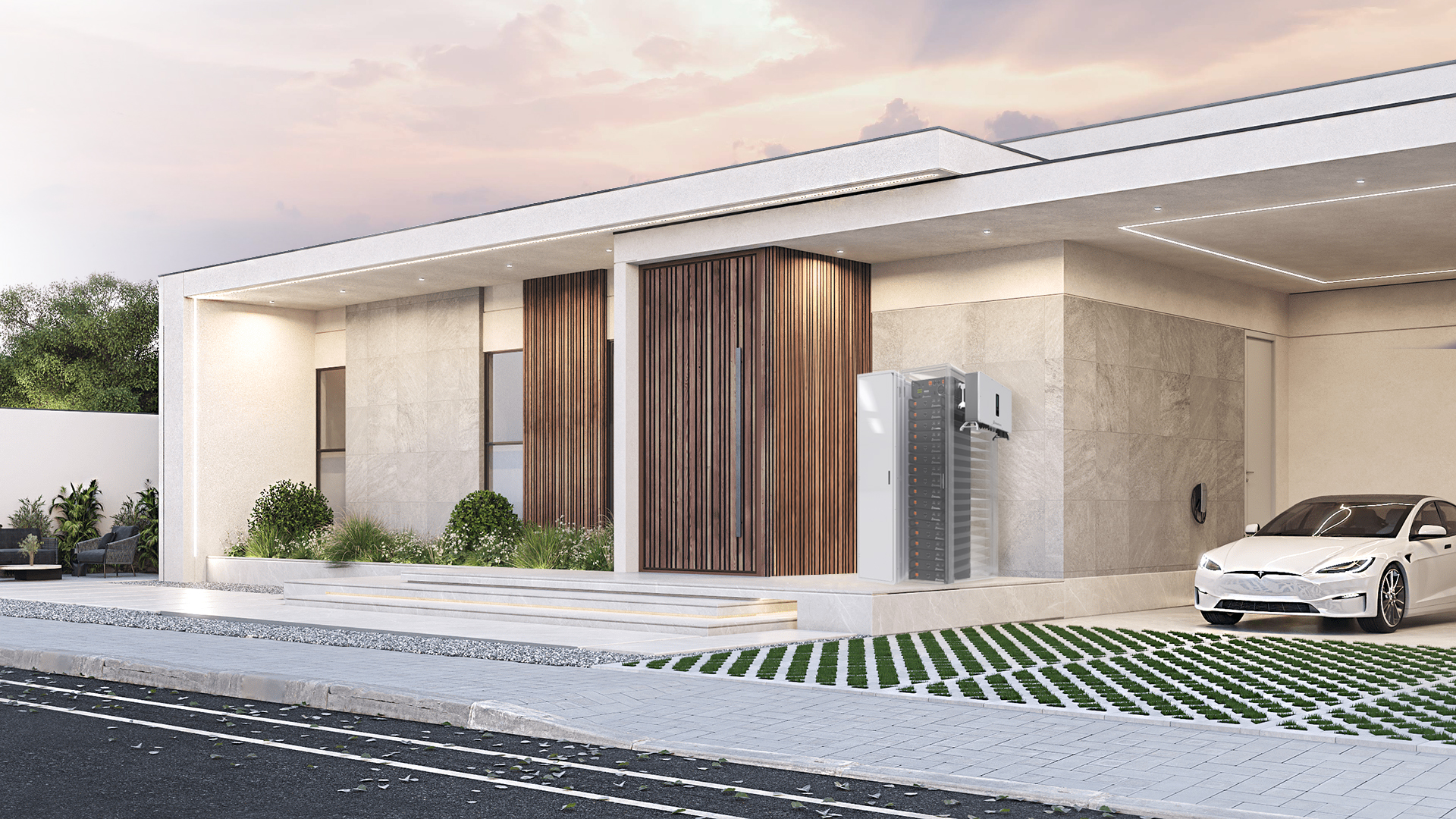
Stromherz Li-HV Commercial Three Phase Hybrid Series ESS

Powerful, and more powerful

Stromherz Commercial High Voltage LiFePO4 Rack

Mounted Battery Modules with BMS

Features
  • Modular designing
  • 8,000 cycles at 90% DOD
  • 150V-1000V flexible voltage designing
  • Compatible with
    Germany known EMS brand Smart1
  • Auto-address setting
    plug in and play
  • Open interface for external
    control and management
Dual Cells Voltage Sensors Channel, 10mA accuracy, 10K sensoring frequency/S, full cells monitoring control
Max. 750mA cells passive balancing(10Ah/day), automatically / manually / local / remote
Automatically slave BMS(BMU) address series setting, plug in and play
Remote commissioning / monitoring / firmware update; 64G local data storage, full life data records
Multi external communication methods: WiFi / LAN / GPRS / RS485
Master BMS(BCU) integrate back-up power, 20000 hours black startup
BMS full data records 100K/frame (cold data <2S, hot data <100mS, command data <10mS)
BMS structure capacitor-free designing, 15-20 years’ designing life
Optimized SOC calculation and reset algorithm, less than 2% tolerance
Low BMS self-consumption, running <5W/rack, standby <2mW/rack
BMS open interface for direct connection with fire fighting equipment and control
BMS SPD integrated for DC surge power protection
System component

Stromherz Hybrid Inverter 30-50KW

Three-Phase; High Voltage Battery; 4 MPPT.
Perfect Power & Storage . Strong Load & Back-up.
Easy Installation & Operation. Flexible in Use.
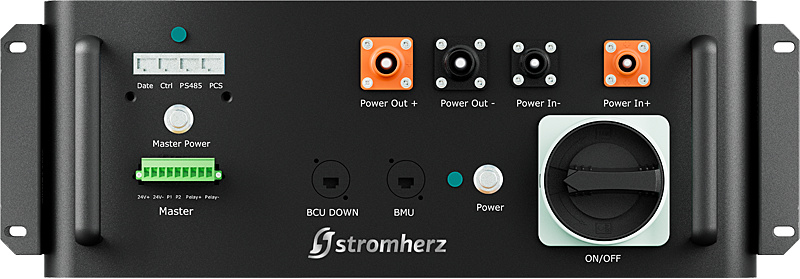
Master BMS

Responsible for monitoring battery operation, health, timely response, adjustment and warning.

Battery Module

38.4V/3.84KWH battery module, connected in series in each single rack of cabinets to achieve greater capacity.
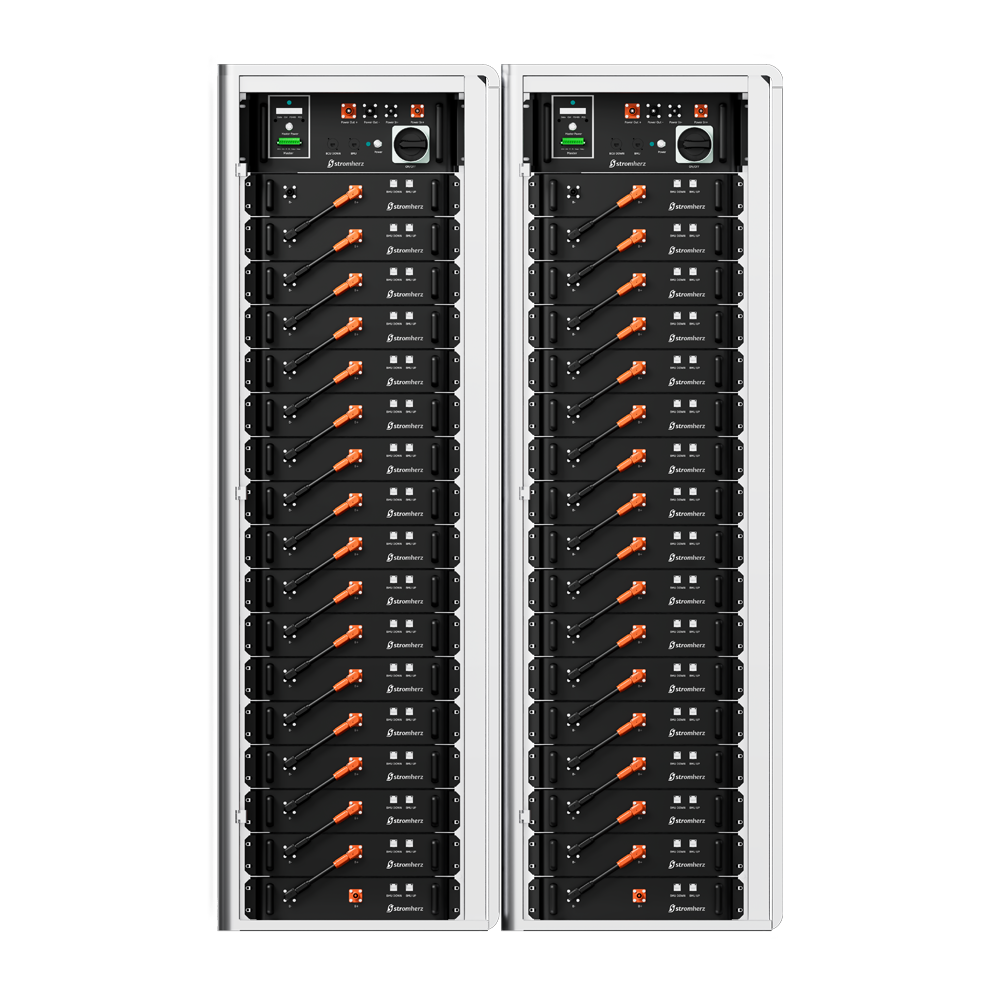
65.28kWh Single Rack

Reliable manufacturing process and partners

Stromherz is committed to the design and manufacture of the most reliable products, so that you do not have to worry about the use of products, and to provide you with the most perfect service.

EMS Partner

PCS Partner

Certificate Partner

Standard running modes
  • Maximum PV Self-Consumption
  • Peak Load Shifting
  • UPS Level
  • Peak Valley Mode
  • Off-grid
  • 0-injection
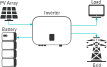
In this working mode, when the power from the PV array is sufficient, PV power will supply the loads, battery, and grid by the following sequence: Loads>Battery>Grid.

PV power will supply the loads with priority, and secondly charge the battery if exceed PV energy, and then feed to the grid. (You can set the power to the grid to 0W if the local grid doesn’t allow through APP or inverter display).

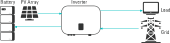
When the PV power is insufficient, the battery will discharge to supply loads, and the grid will join in if the battery power is not enough.
General Mode --- Sufficient PV Generation
General Mode --- Insufficient PV and Battery
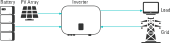
In this working mode, the customer can set the maximum allowable power from grid("Pmax") through App or inverter display. When the loads consumption less than the Pmax, loads are supplied by the PV array and grid together.

When the loads consumption more than the Pmax, the power exceeded Pmax (cannot be higher than the inverter max output power) will be supplied by the inverter. PV power will take the priority to supply loads and if not enough, the battery will support the real-time loading immediately.

* To realize the “Peak Load Shifting” function, the load power that exceeded Pmax has to be within the inverter max output power, otherwise, the inverter will only output the max power which allowed.
Peak Load Shifting --- Loading < Pmax
Peak Load Shifting --- Loading > Pmax
In this working mode, the inverter will use the power from PV or grid (Set by App) to charge the battery with full power and top priority until it is fully charged, and as long as the grid is there, the battery won’t discharge.
When the grid is cut off, power from PV and battery will suppy real-time loading connected to inverter back-up port immediately within 10ms.

* During UPS mode, if battery long time no discharge, the inverter will discharge and charge battery periodically(every 1 week) with small current roughly 1A to to reset battery SOC.
In this working mode, the customer can set time-based scheduled charge and discharge by App, inverter will use the power from PV or grid(selectable by APP) to charge the battery in the scheduled period.

Inverter will use power from PV and battery to supply loads in the scheduled period and the insufficient part will be supplied by the grid.
Scheduled Charge --- Peak Valley Mode
Scheduled Discharge --- Peak Valley Mode
In the purely off-grid mode, power from PV will supply the back-up loads firstly and then charge the battery if there is surplus PV generation.

When the power from PV is weak, the battery will discharge to supply back-up loads together with or without PV.
Off-Grid --- Charge
Off-Grid --- Discharge
In this working mode, once battery full and real-time loading can be satisfied, inverter will automatically reduce PV generation to prevent injection into the grid.
File download